 YogaFold
YOGAFOLD · POSE GUIDE
Legs-Up-the-Wall / Inverted Action
Viparita Karani
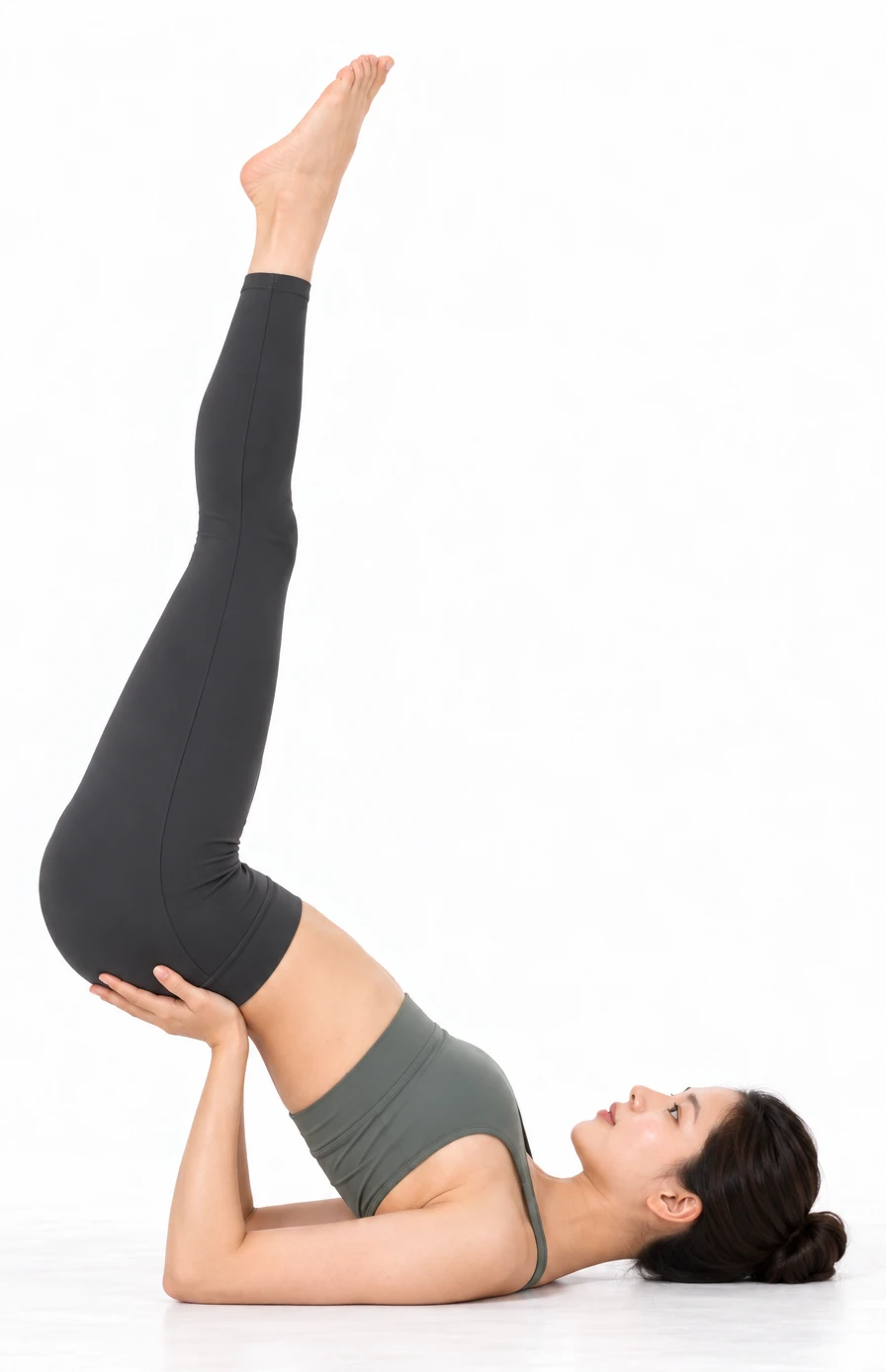
Place the pelvis and legs above the torso in an active supported inversion or a restful wall-supported variation.
Viparita means inverted; karani means action.
Distinguish the photographed active form from resting with the legs up a wall.
This entry explains preparation and movement characteristics. It does not provide a complete practice procedure for the advanced photographed variation. Learn entry and exit directly with a teacher.
Movement guidance
Preparation
Check shoulder and arm support and a controlled lowering of the pelvis with a teacher.
Understanding the movement
The photograph shows an active inversion with the hands lifting the pelvis and the torso angled, distinct from resting with the pelvis on the floor.
Hold and breathe
In the active form, support the pelvis steadily with the hands and arms and keep the head centered. Keep breathing comfortably without holding your breath.
Exit and next movement
Use the sequence learned with a teacher to lower the hand-supported pelvis.
Variations and sequence transitions
Choose variations and transitions within your comfortable range.
Legs Up the Wall · Restorative form · Beginner
Viparita Karani (Legs Up the Wall)
Viparita means inverted; karani means action. This is the wall-supported resting variation.
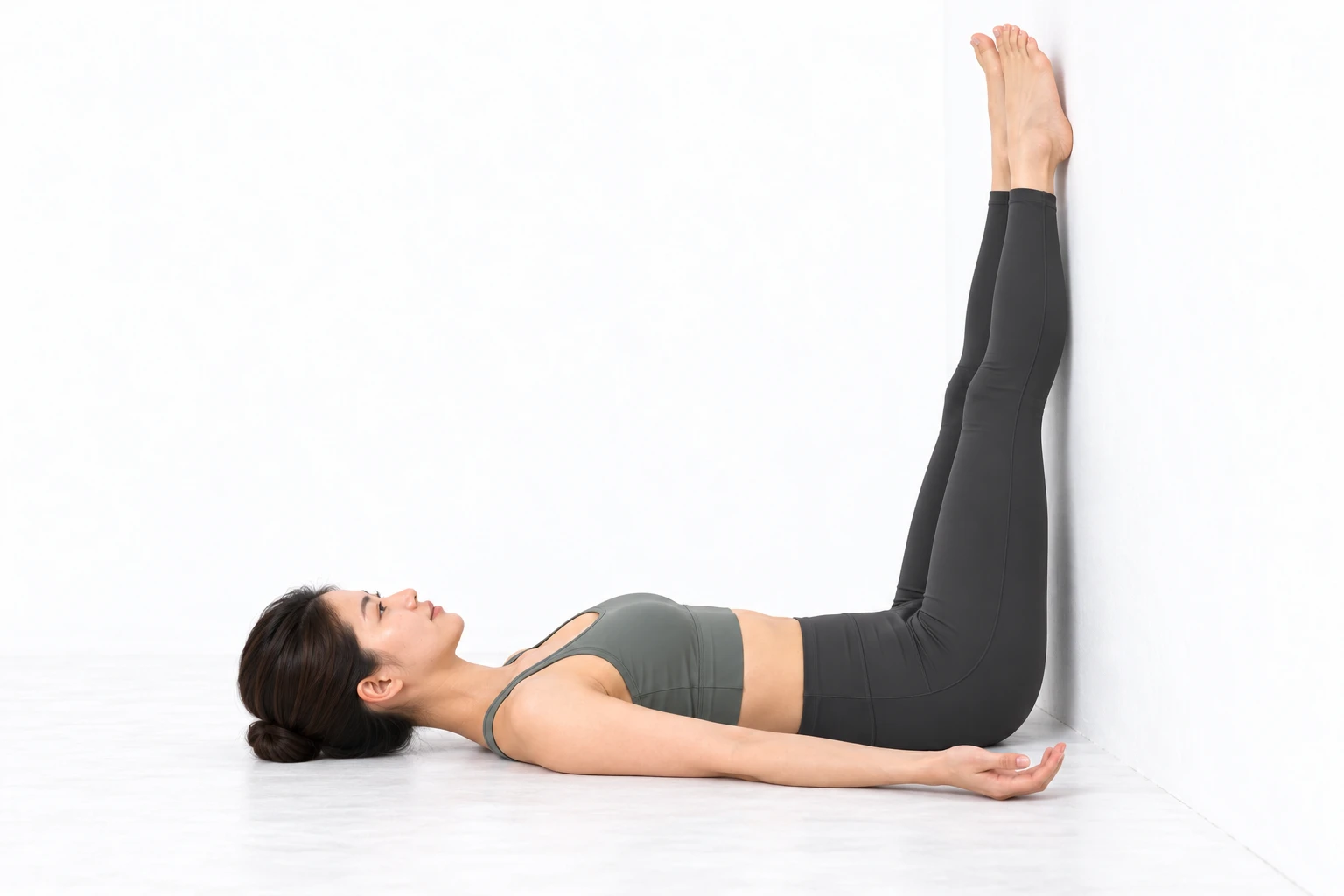
Unlike the active hand-supported main photograph, keep the head, back, and pelvis on the floor with the legs resting on a wall and arms relaxed.
Preparation
Sit close to a wall with one side of the body facing it and hands supporting on the floor.
Entry and alignment
Lower the torso slowly while turning the legs up the wall. Keep the pelvis grounded and choose a comfortable distance from the wall.
Hold and breathe
Rest the head and shoulders down without strongly tucking the chin. Bend the knees if needed and do not lift the pelvis with the hands. Keep breathing comfortably without holding your breath.
Exit and next movement
Bend the knees, slide the feet down, and roll onto one side. Press through the hands to sit up slowly.
Move farther from the wall or bend the knees. Rest the calves on a chair if wall support is uncomfortable.
Easier variations and preparation
Choose the restorative form with the pelvis on the floor and legs resting up a wall.
Difficulty refers to the photographed form. Individual experience may differ.
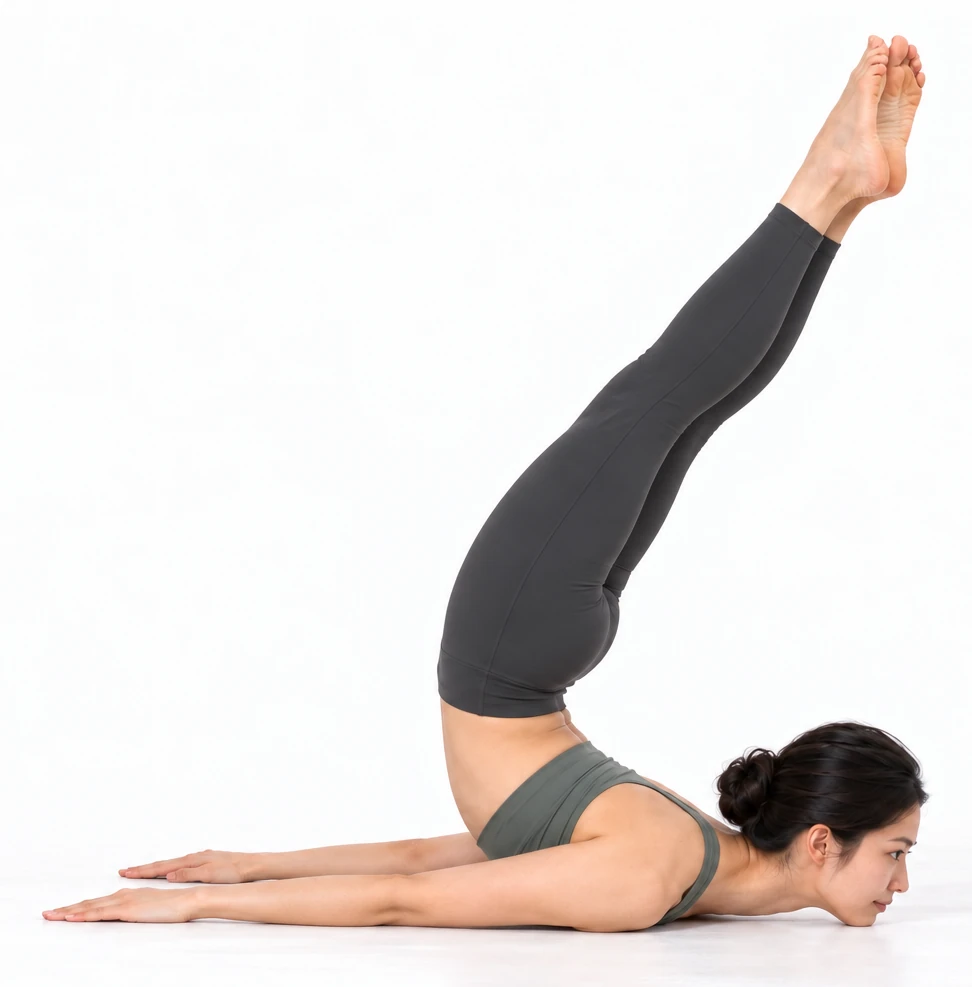 Viparita Salabhasana (Inverted Locust)
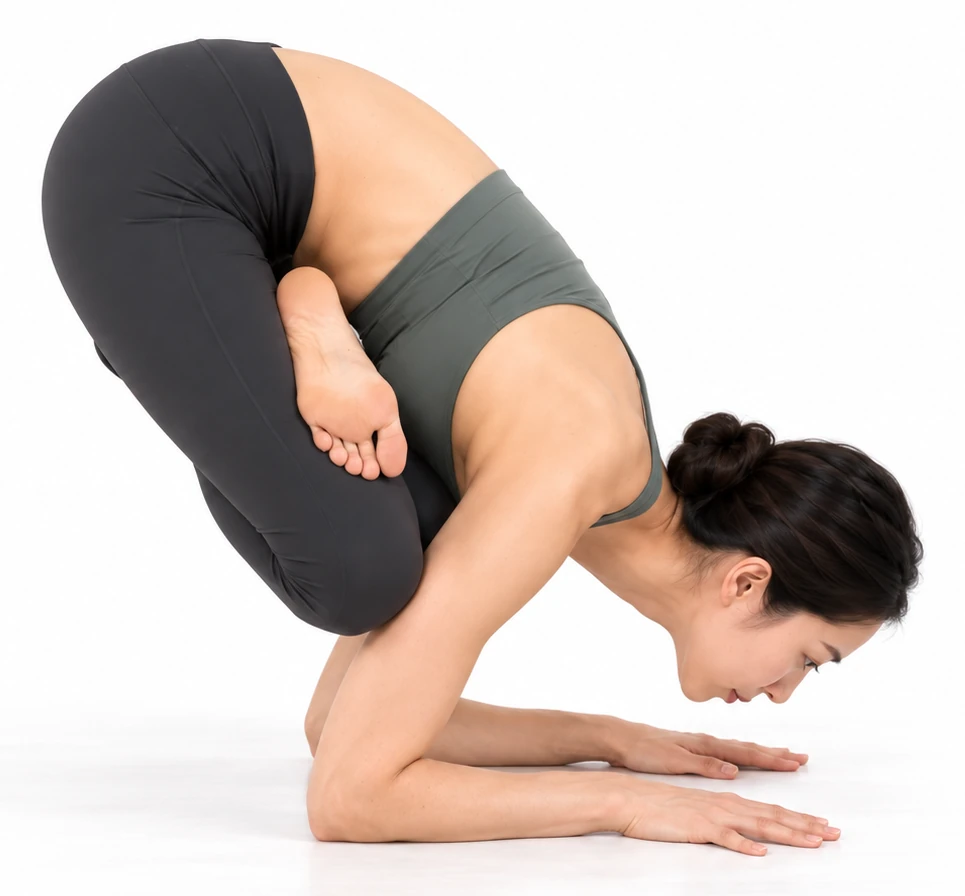 Karandavasana (Duck Pose)
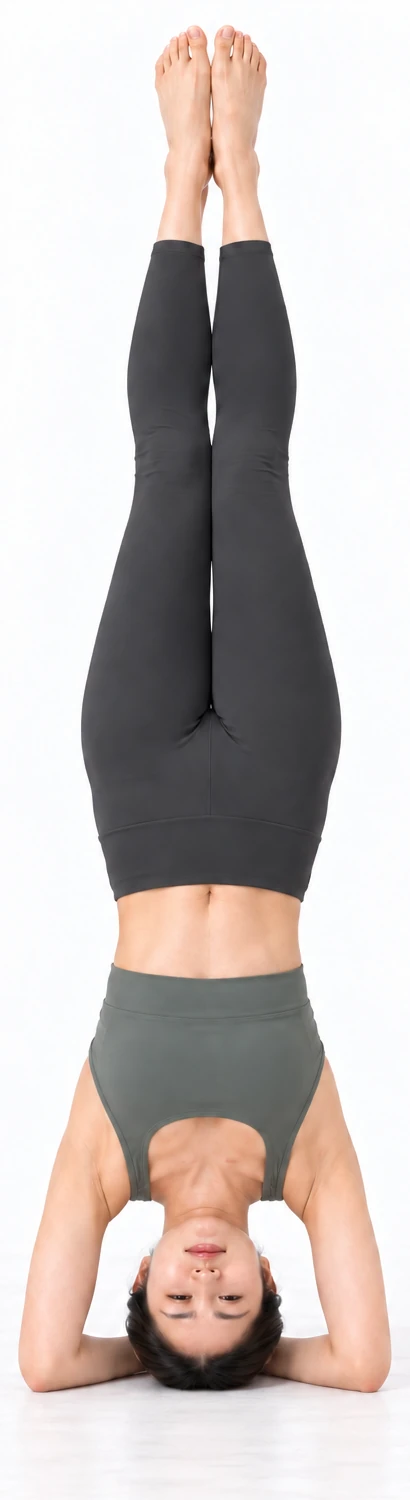 Salamba Sirsasana (Supported Headstand)
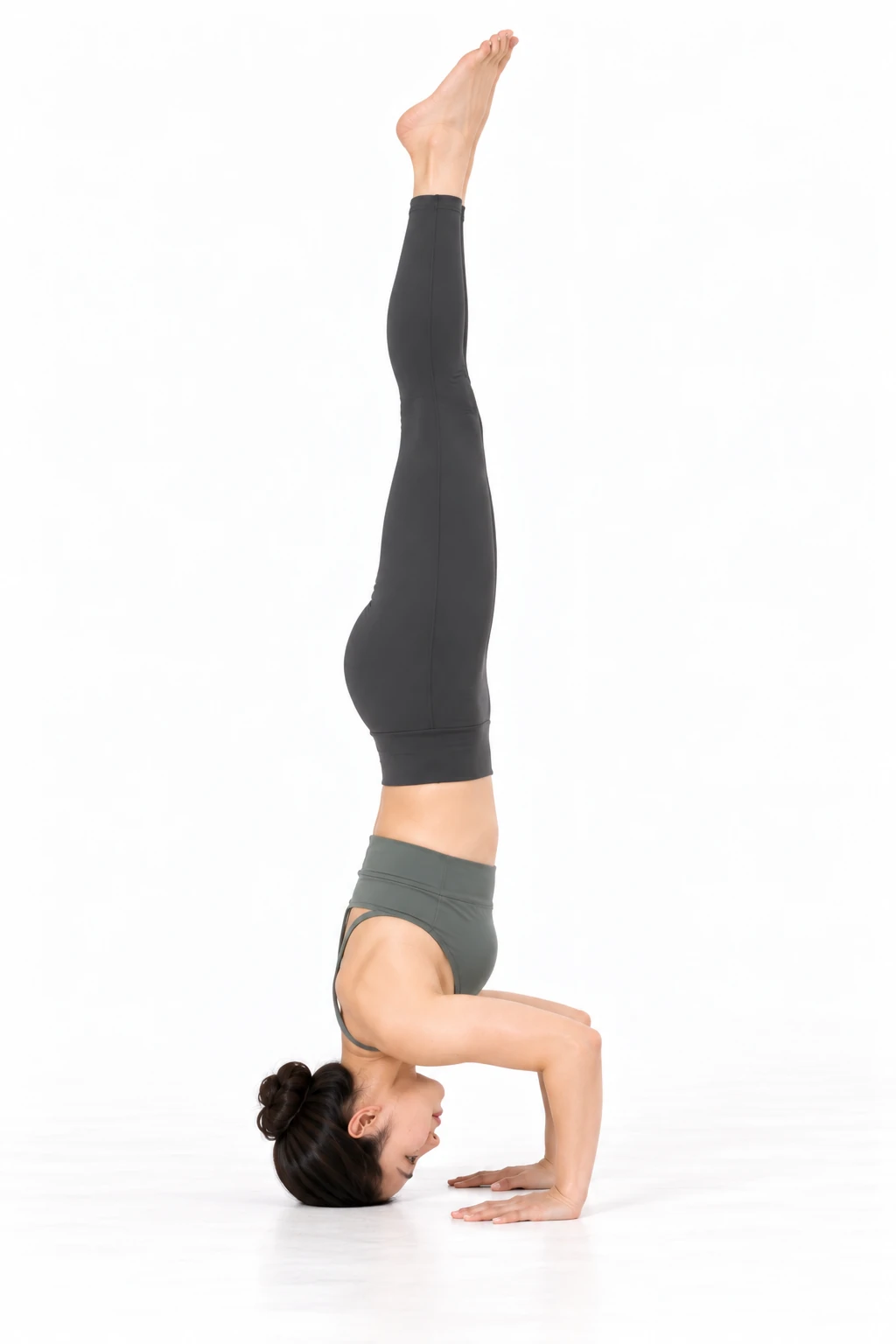 Mukta Hasta Sirsasana (Free-Hand Headstand)