 YogaFold
YOGAFOLD · POSE GUIDE
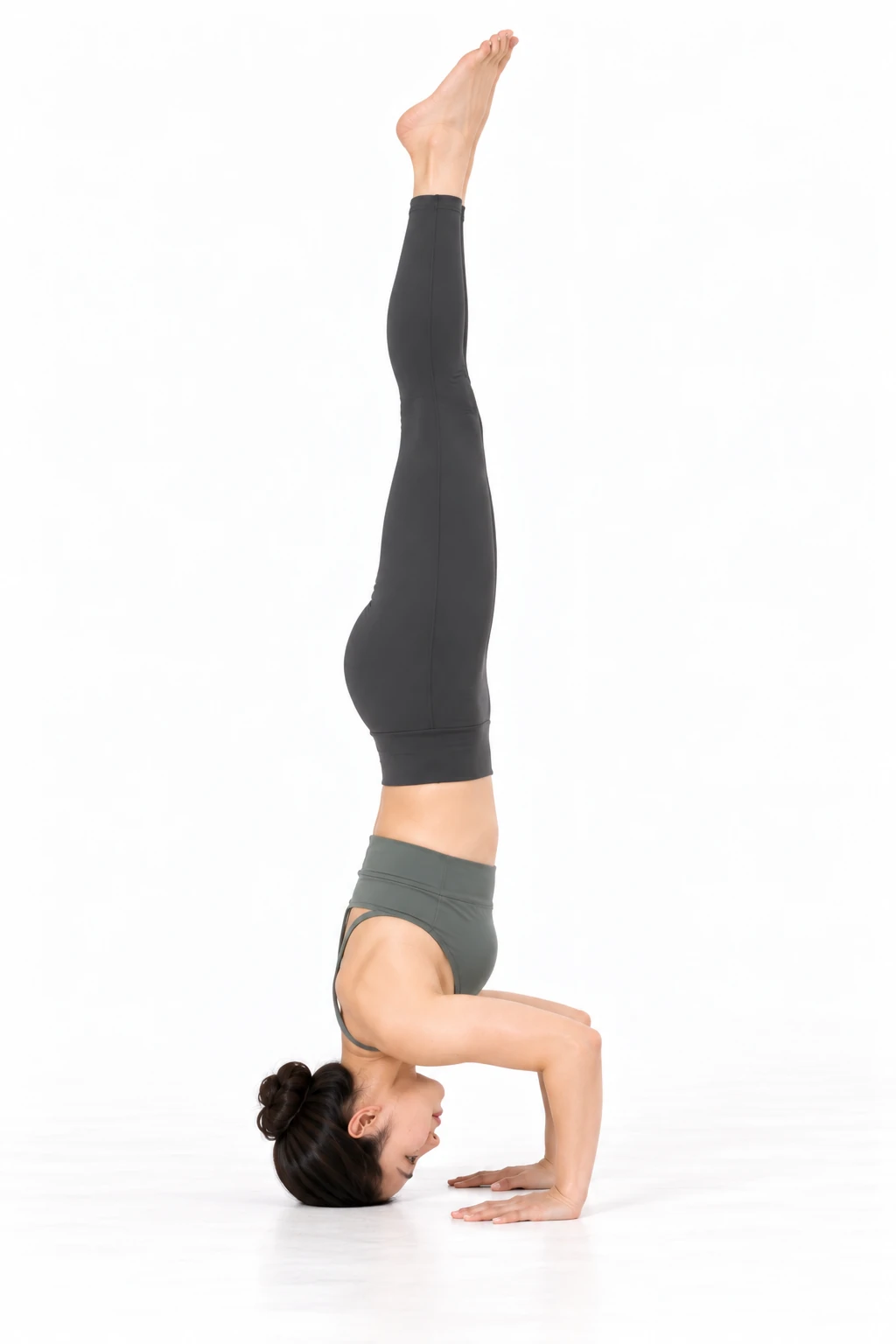
Free-Hand Headstand
Mukta Hasta Sirsasana
Use the crown and both palms in a triangular base for a tripod-style headstand.
Mukta hasta means free hands; sirsa means head.
Hand placement differs from the forearm-supported headstand.
This entry explains preparation and movement characteristics. It does not provide a complete practice procedure for the advanced photographed variation. Learn entry and exit directly with a teacher.
Movement guidance
Preparation
Check the three-point support and a controlled return of the feet with a teacher.
Understanding the movement
The photograph uses the head and hands in a triangle with bent elbows, rather than clasped hands behind the head.
Hold and breathe
Keep the feet down until head and hand placement and shoulder support are familiar. Keep breathing comfortably without holding your breath.
Exit and next movement
Learn to return the knees toward the arms and lower the feet directly with a teacher.
Variations and sequence transitions
Choose variations and transitions within your comfortable range.
Mukta Hasta Sirsasana B · Backs of hands
Use the head and backs of the hands with long arms. Standard palm-supported Tripod Headstand instructions do not apply directly.
Mukta Hasta Sirsasana C · Arms out to the sides
Place palms down with arms extended sideways. The hand support differs from bent-arm variation A.
Easier variations and preparation
Practice hands-and-knees preparation with a teacher.
Difficulty refers to the photographed form. Individual experience may differ.
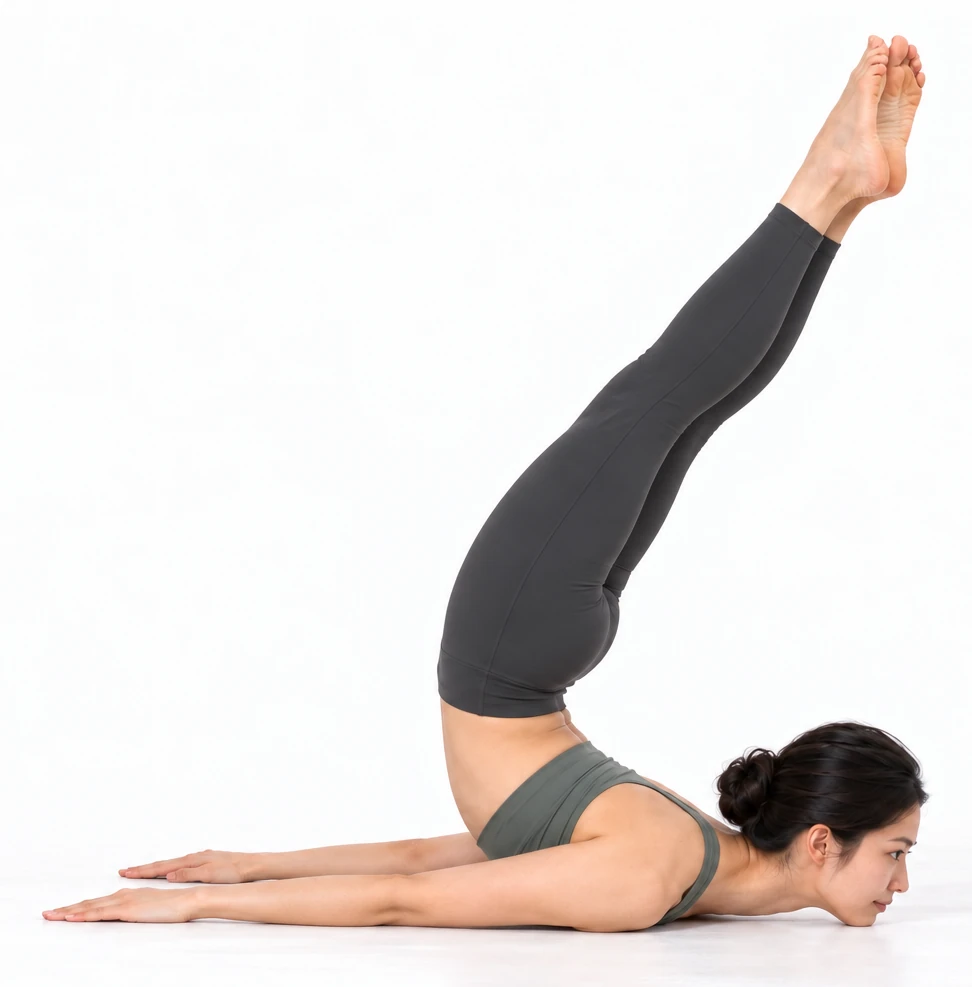 Viparita Salabhasana (Inverted Locust)
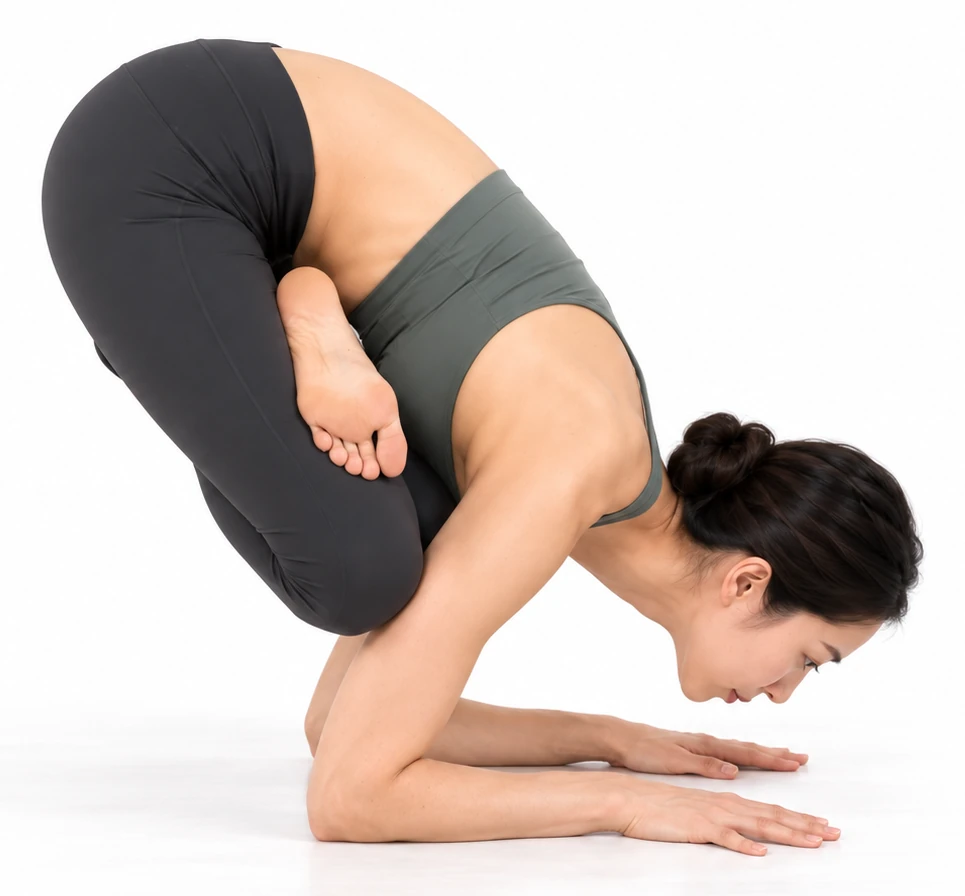 Karandavasana (Duck Pose)
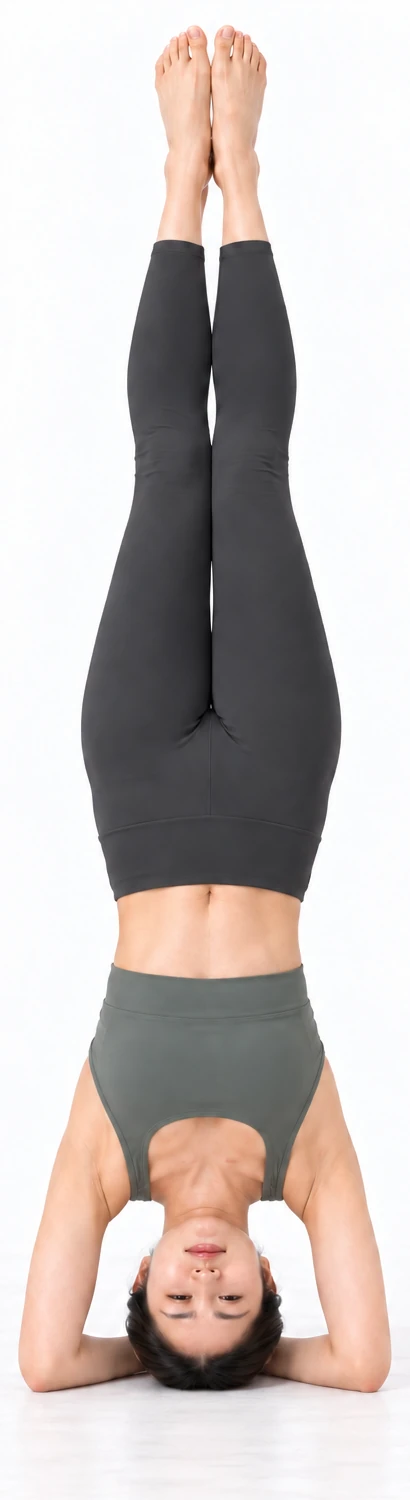 Salamba Sirsasana (Supported Headstand)
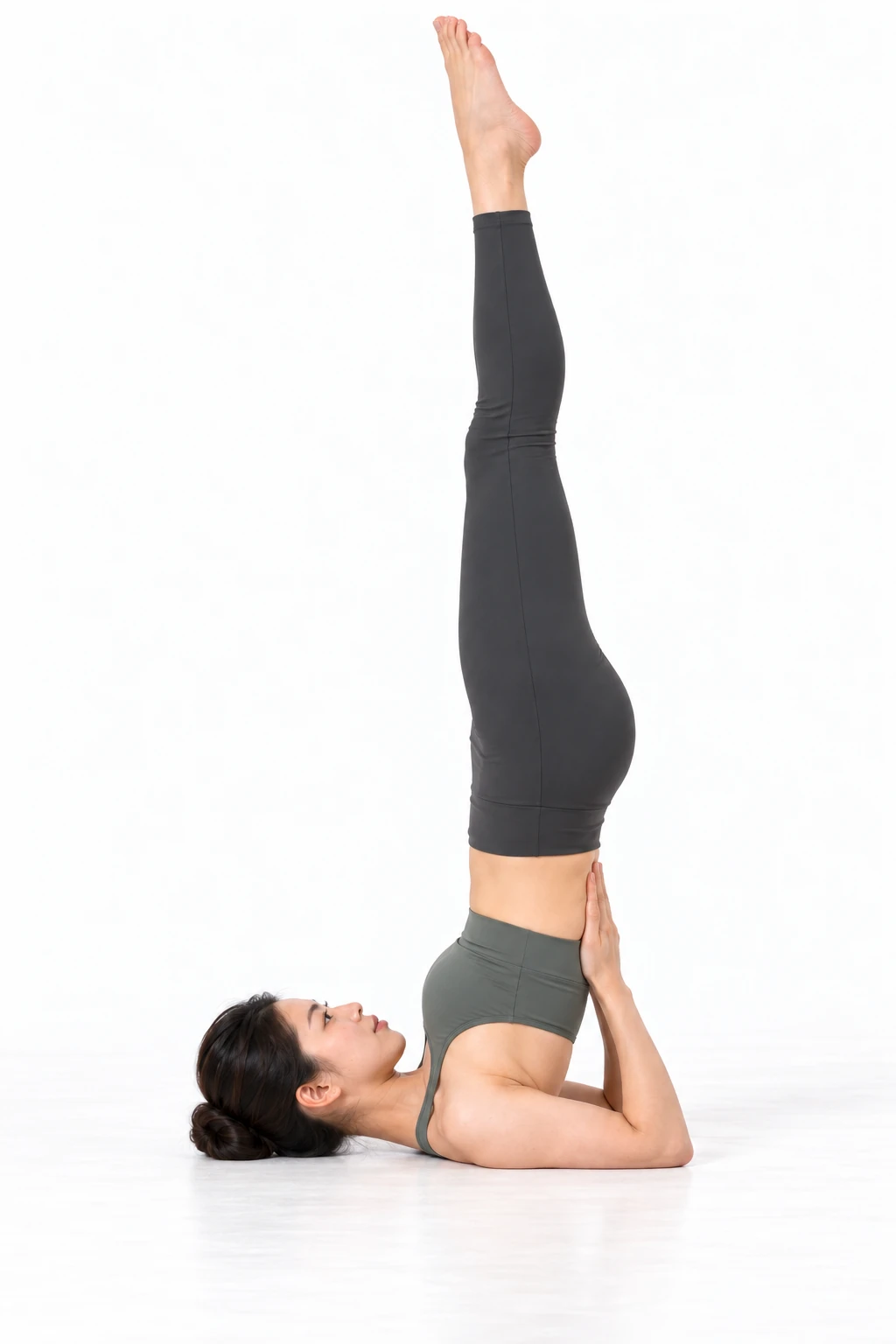 Salamba Sarvangasana (Supported Shoulderstand)