 YogaFold
YOGAFOLD · POSE GUIDE
Pigeon Pose
Kapotasana
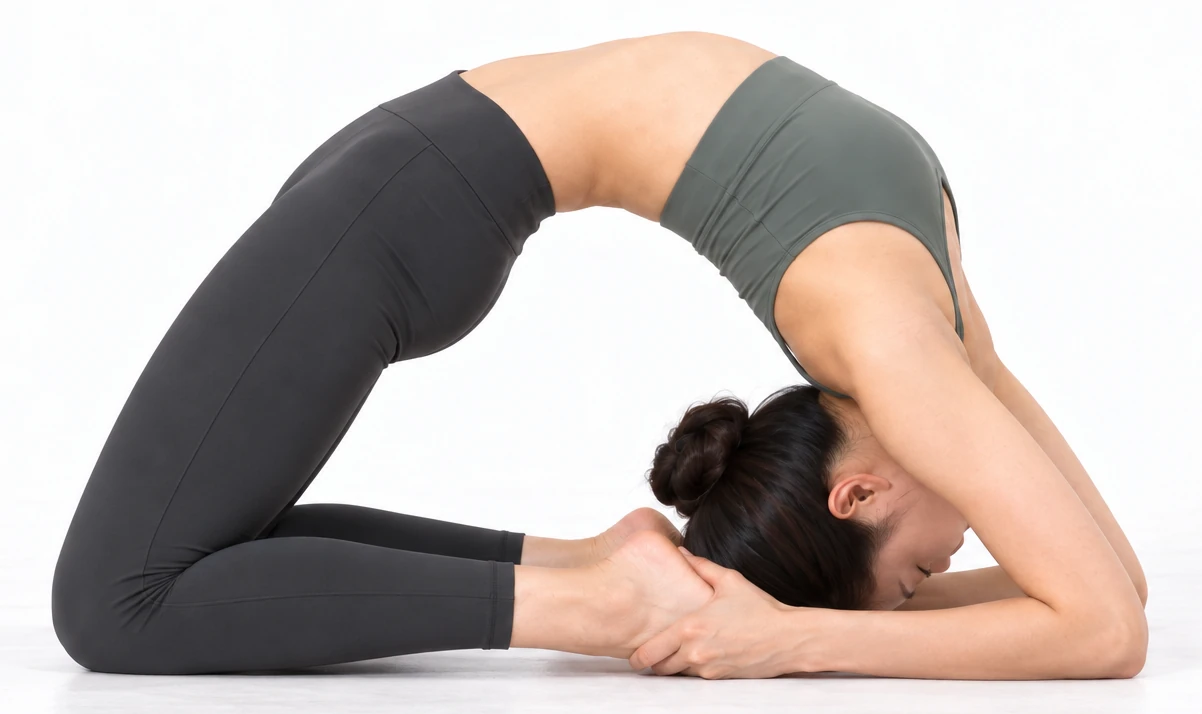
From kneeling, arch deeply backward toward the feet or floor.
Kapota means pigeon.
This is a deep kneeling backbend, distinct from the front-leg-folded Pigeon. Learn entry and exit in person.
This entry explains preparation and movement characteristics. It does not provide a complete practice procedure for the advanced photographed variation. Learn entry and exit directly with a teacher.
Movement guidance
Preparation
Find a comfortable range in low kneeling backbends such as Camel.
Understanding the movement
This Kapotasana opens backward from both knees. It differs from the familiar Pigeon preparation with one leg folded in front.
Hold and breathe
Do not force the lower back or neck to make the hands reach the feet. Keep breathing comfortably without holding your breath.
Exit and next movement
Learn the release of support and return from this deep backbend directly with a teacher.
Variations and sequence transitions
Choose variations and transitions within your comfortable range.
Kapotasana A · Heel hold
Reach overhead to hold the heels in a deep kneeling backbend with forearm support. Do not pull the feet to compress the lower back or neck.
Kapotasana B · Palm support
Support a deep kneeling backbend by pressing both palms into the floor behind you, distinct from the heel hold in variation A.
Easier variations and preparation
Use a low Camel with hands on the lower back.
This advanced variation requires support and range of motion. Check preparation and exit with a teacher when first learning.
Difficulty refers to the photographed form. Individual experience may differ.
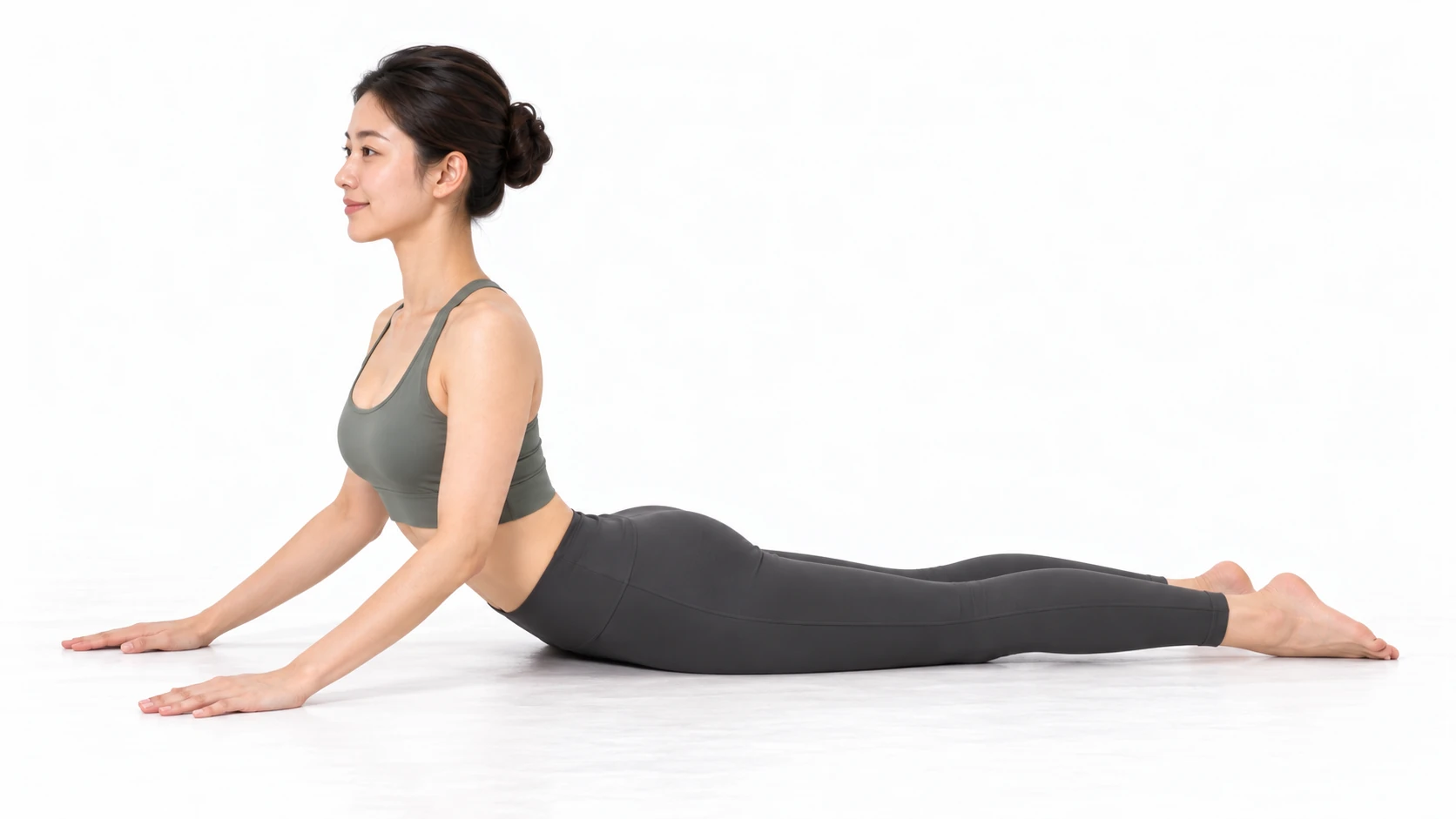 Bhujangasana (Cobra Pose)
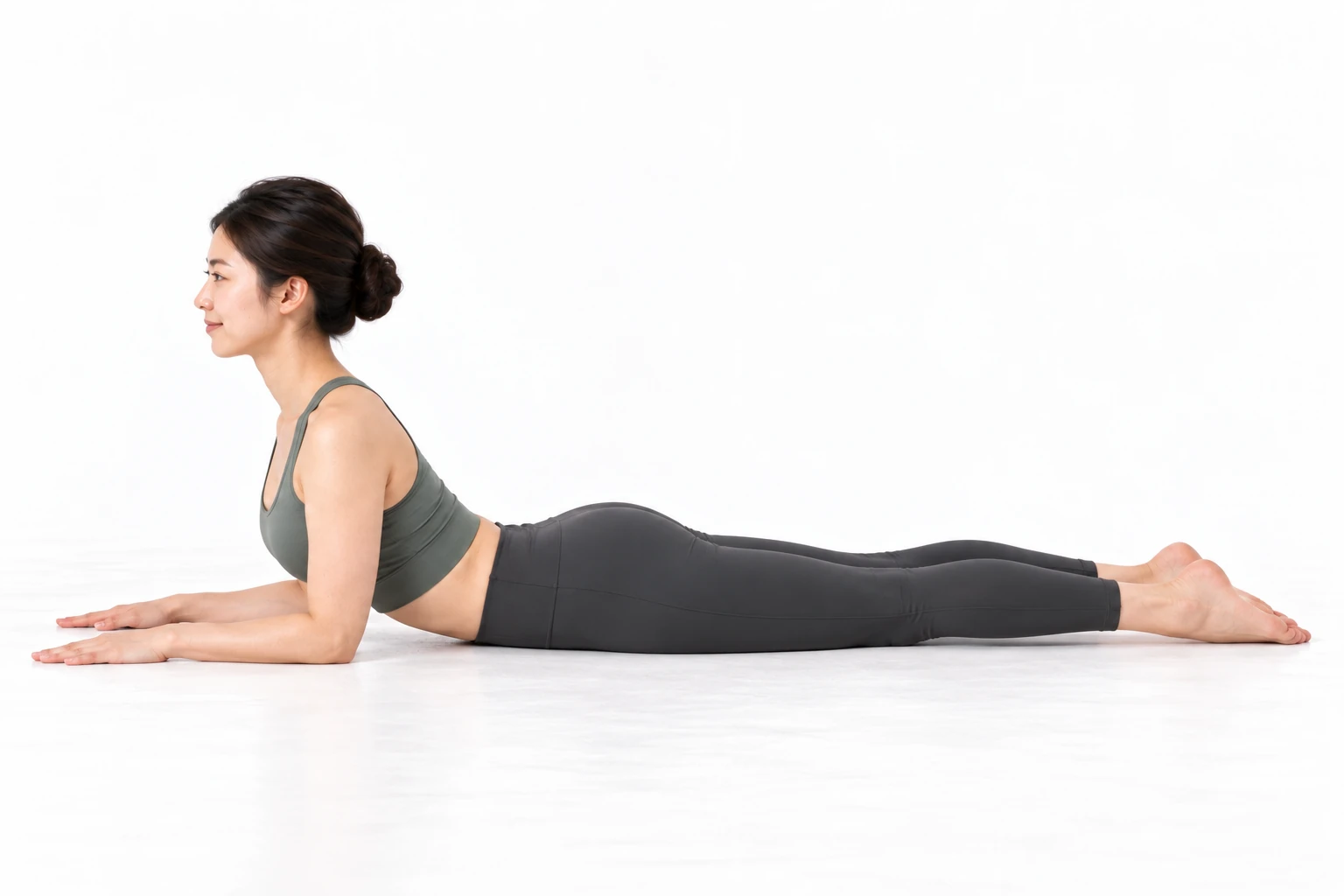 Salamba Bhujangasana (Sphinx Pose)
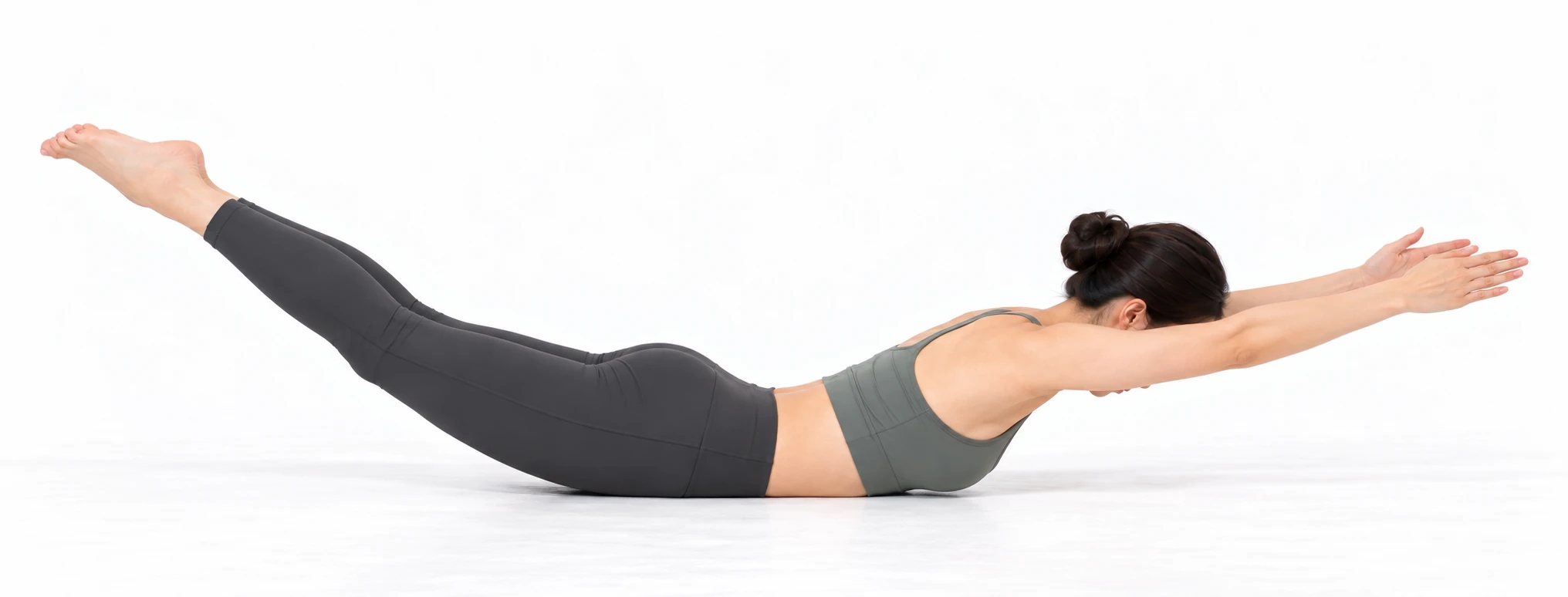 Salabhasana (Locust Pose)
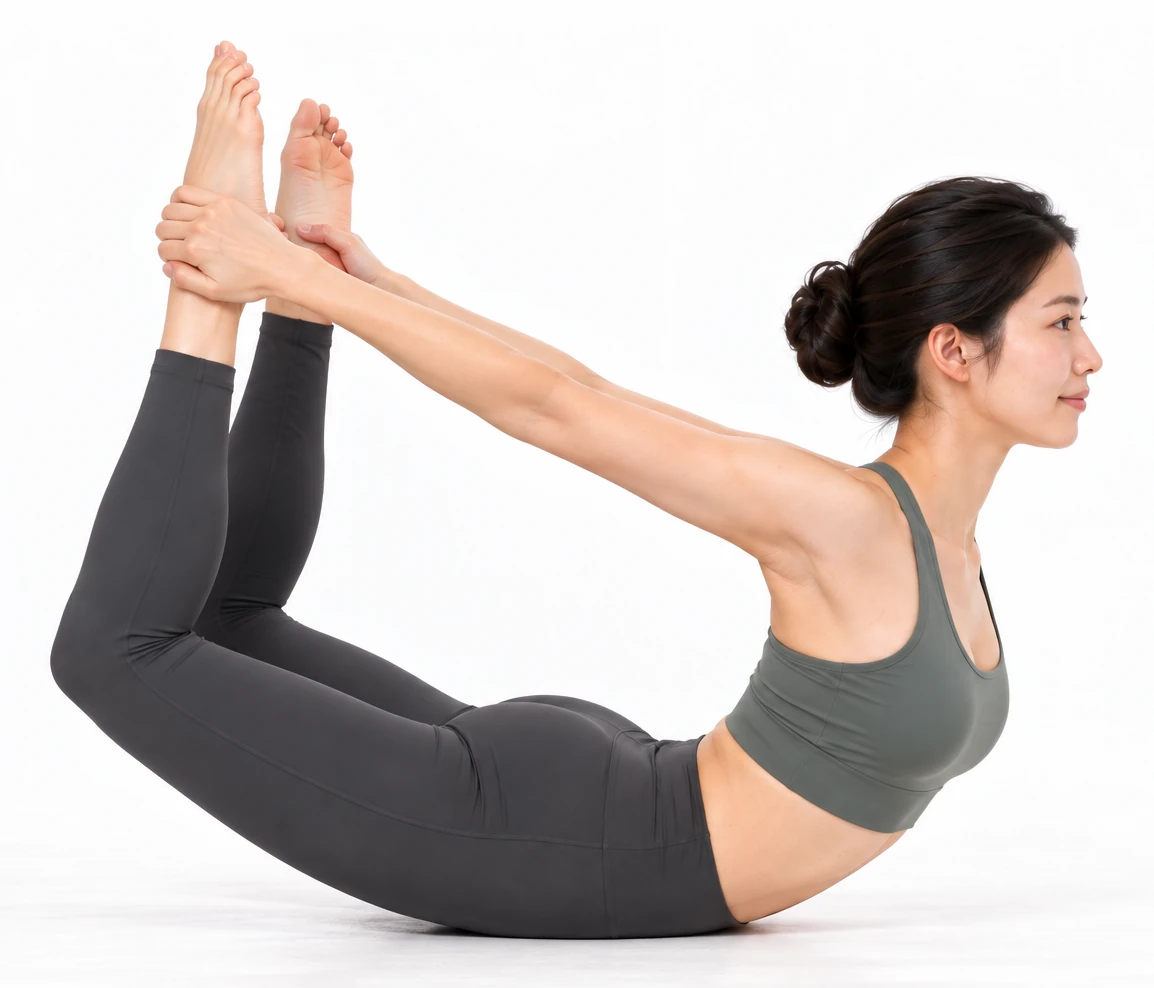 Dhanurasana (Bow Pose)