 YogaFold
YOGAFOLD · POSE GUIDE
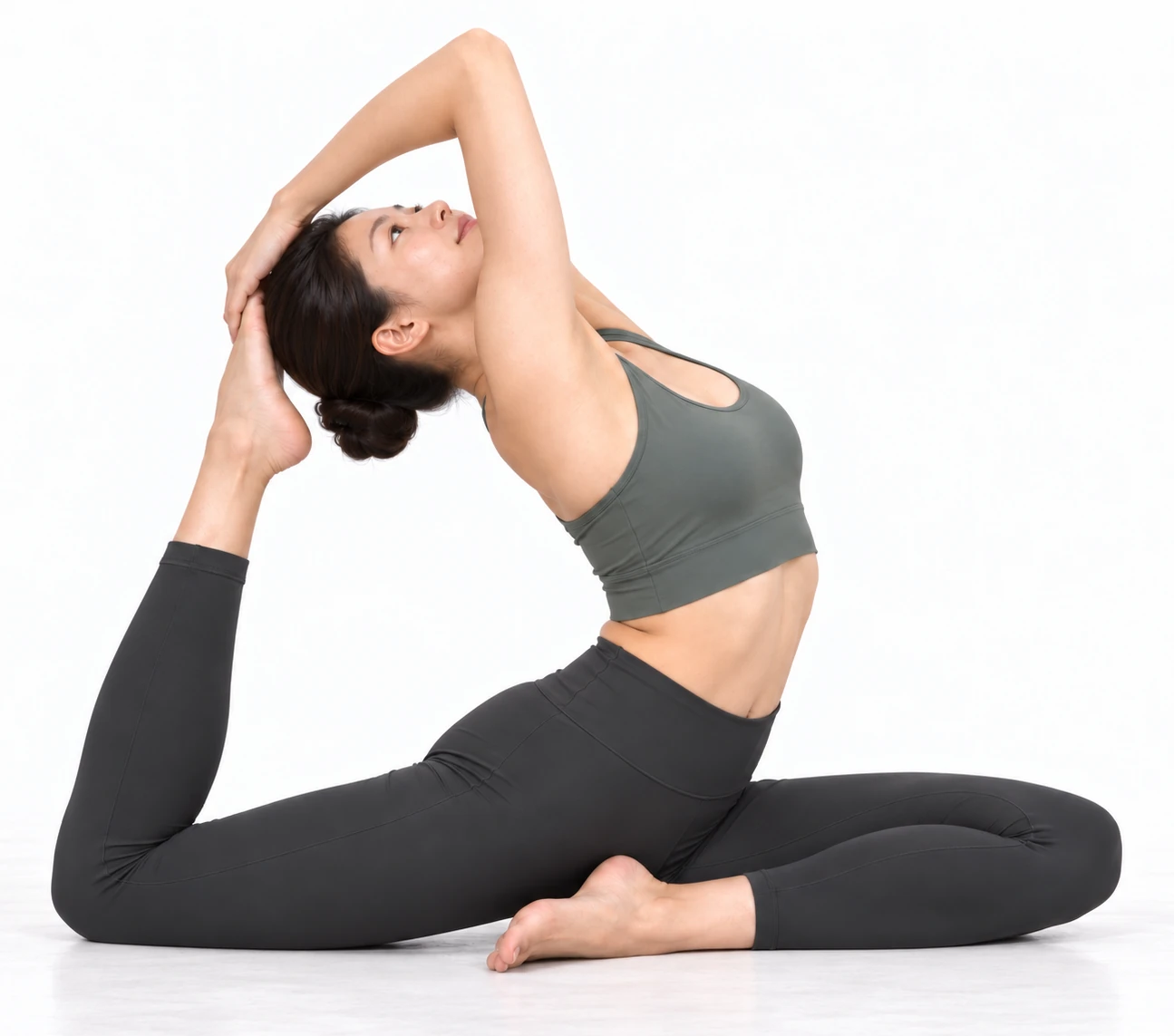
One-Legged King Pigeon Pose
Eka Pada Rajakapotasana
Fold the front leg, extend the back leg, then bend the back knee for an overhead foot hold.
Eka pada means one leg; raja means king; kapota means pigeon.
Prepare basic Pigeon separately from the advanced overhead foot-holding variation.
This entry explains preparation and movement characteristics. It does not provide a complete practice procedure for the advanced photographed variation. Learn entry and exit directly with a teacher.
Movement guidance
Preparation
Prepare basic Pigeon with the front leg folded and back leg extended.
Understanding the movement
The photographed King Pigeon adds an overhead hold of the back foot, requiring pelvic support and substantial shoulder range.
Hold and breathe
Do not press the front knee down or pull the back foot against the head. Keep breathing comfortably without holding your breath.
Exit and next movement
Learn the release of the overhead grip and back leg directly with a teacher.
Variations and sequence transitions
Choose variations and transitions within your comfortable range.
Pigeon Preparation · Back foot released · Intermediate
Eka Pada Rajakapotasana preparation (Pigeon Preparation)
Eka means one; pada means leg; raja means king; kapota means pigeon. This is a basic preparation.
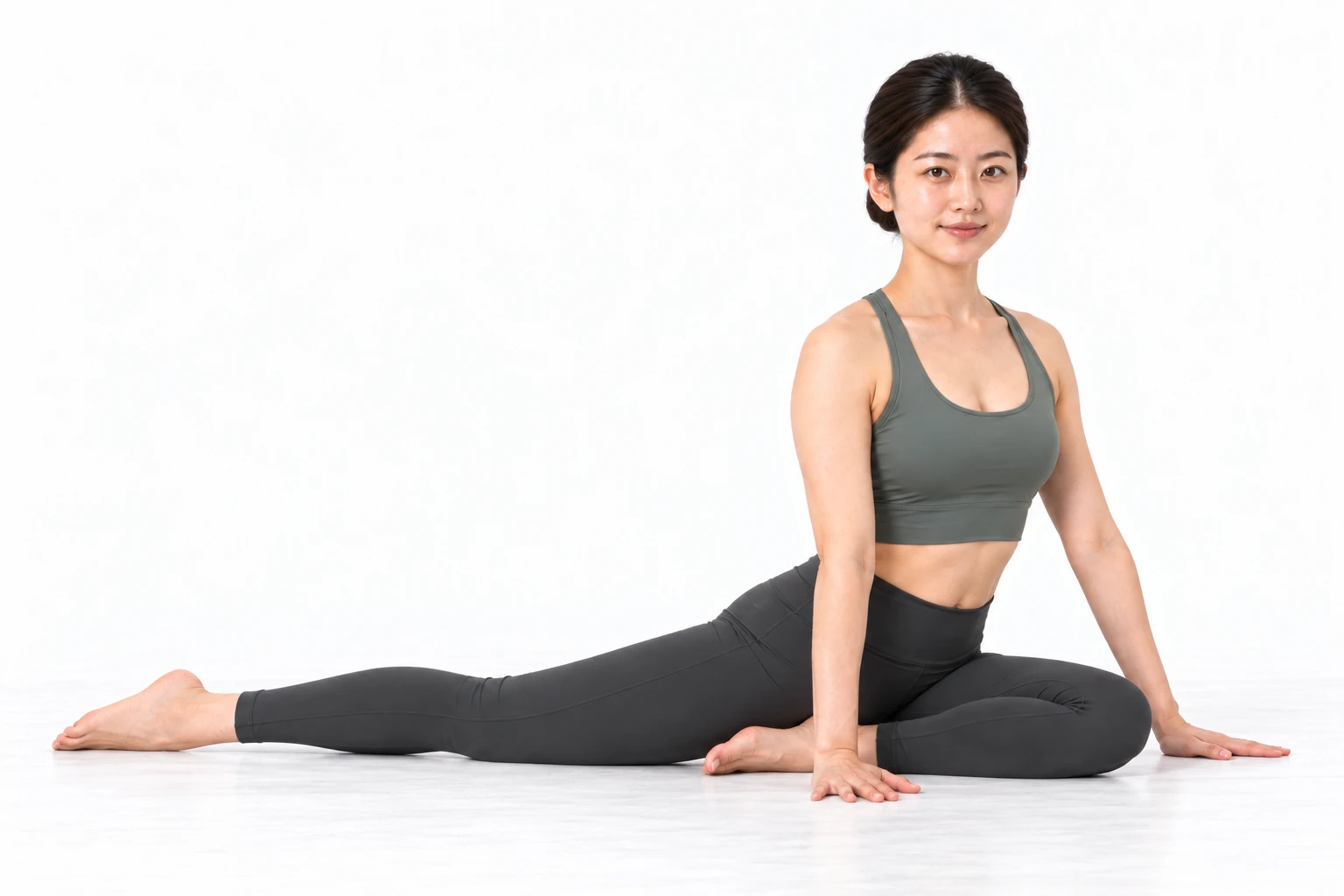
Prepare for overhead-foot-holding King Pigeon with the front leg folded, back leg extended on the floor, and both hands supporting.
Preparation
From all fours, bring one knee behind the same-side wrist with the heel near the opposite hip.
Entry and alignment
Extend the other leg back with the knee and top of the foot grounded. Support both hands beside the hips and lift the torso comfortably.
Hold and breathe
Do not force the front shin to be horizontal or let the pelvis collapse sideways. Support a lifted front hip with a folded blanket or bolster. Keep breathing comfortably without holding your breath.
Exit and next movement
Press through the hands to lift the pelvis slightly and move the front knee back to all fours without twisting the leg out.
If the knee or pelvis is uncomfortable, prepare the hips in reclining Figure Four instead.
Easier variations and preparation
Skip the foot hold and support the pelvis and torso.
Difficulty refers to the photographed form. Individual experience may differ.
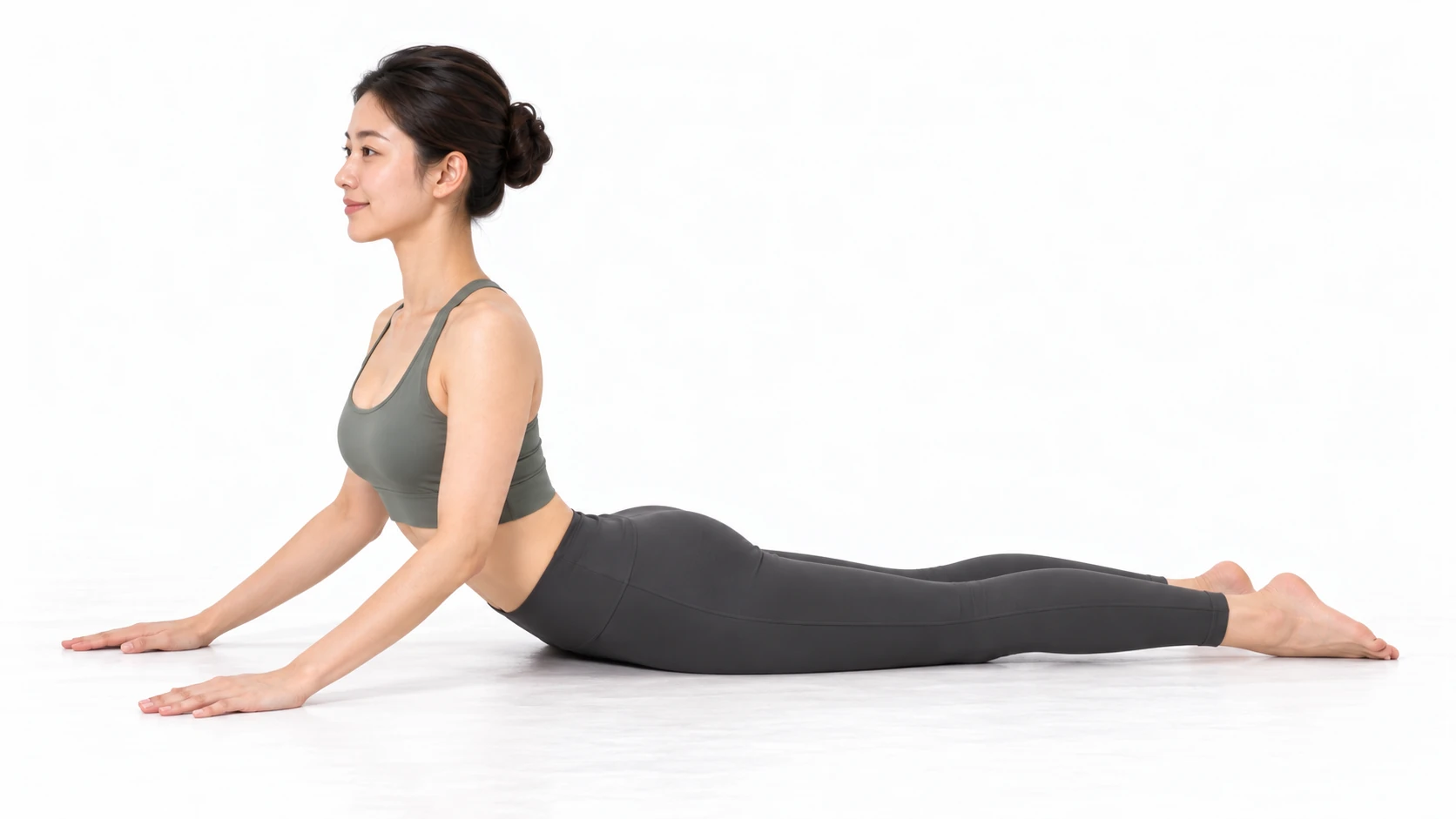 Bhujangasana (Cobra Pose)
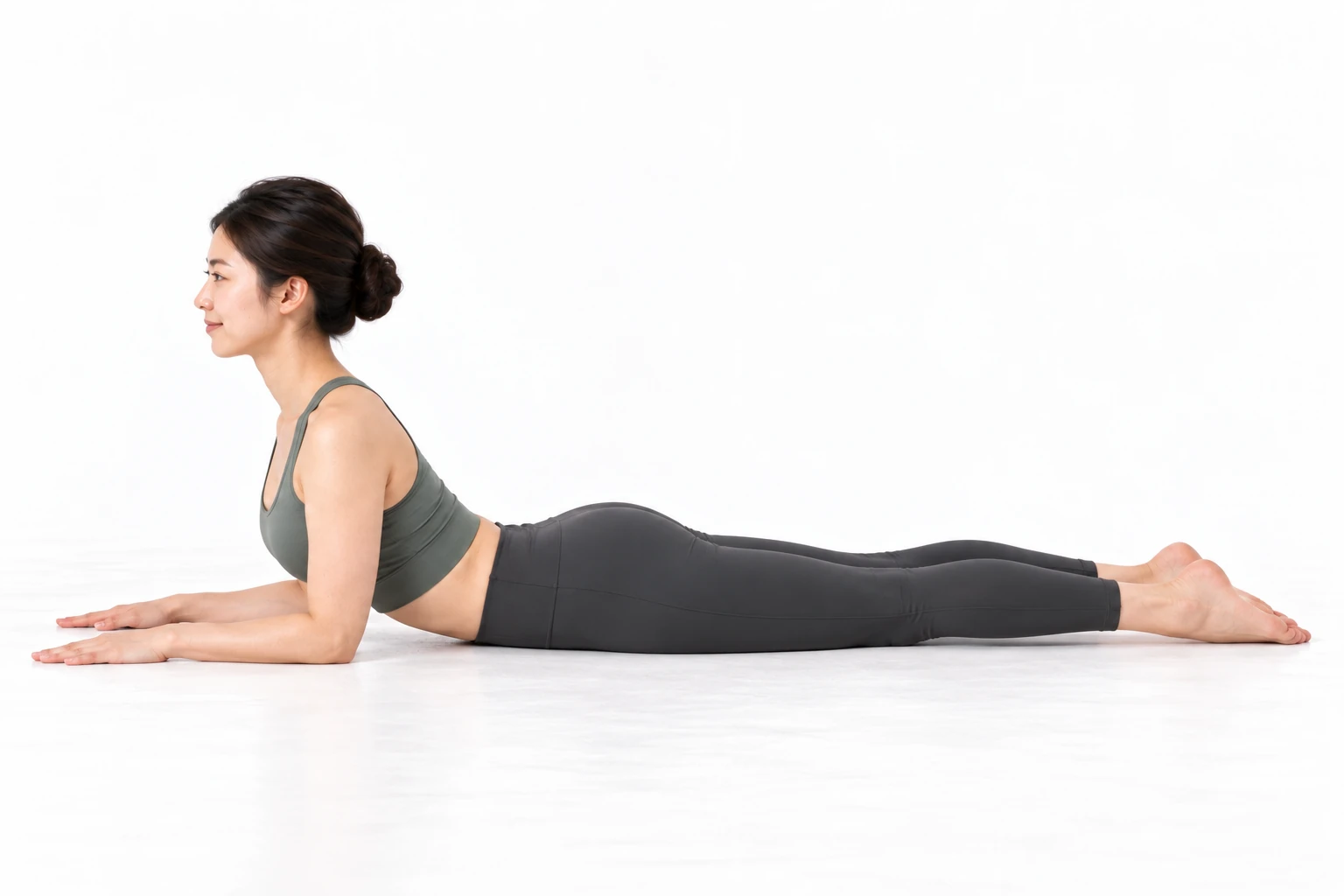 Salamba Bhujangasana (Sphinx Pose)
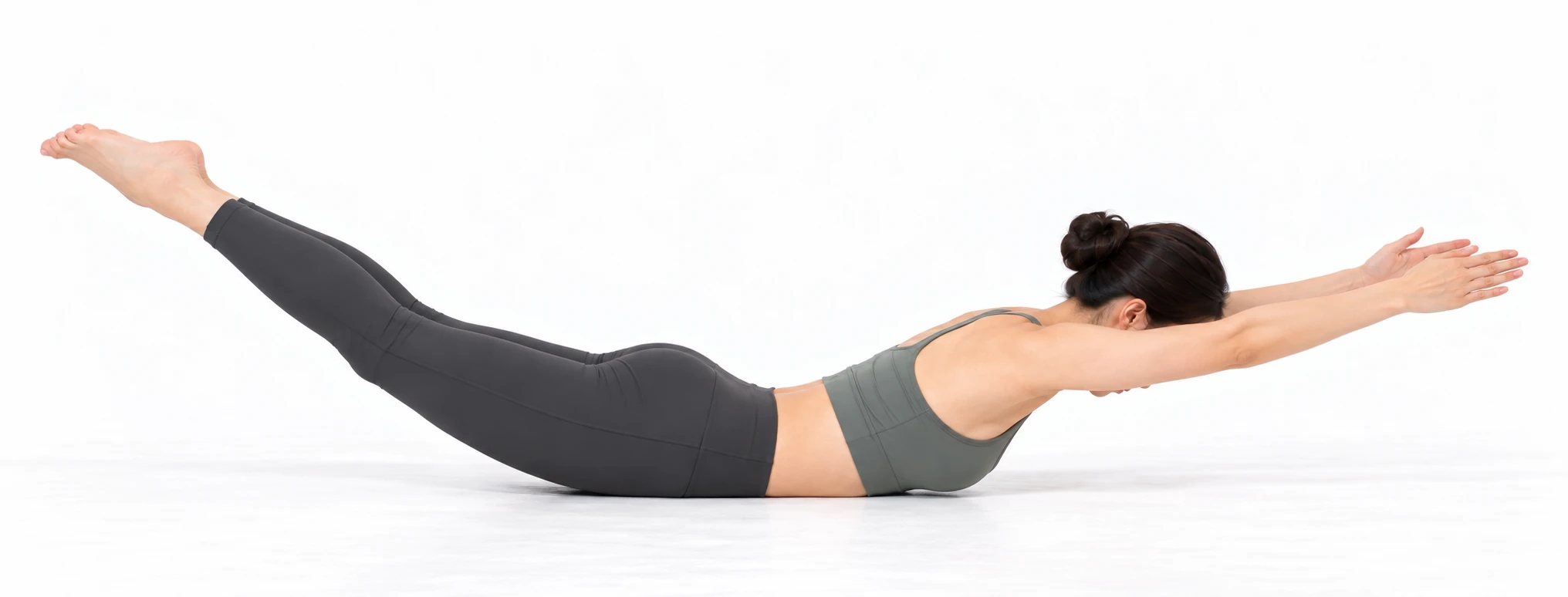 Salabhasana (Locust Pose)
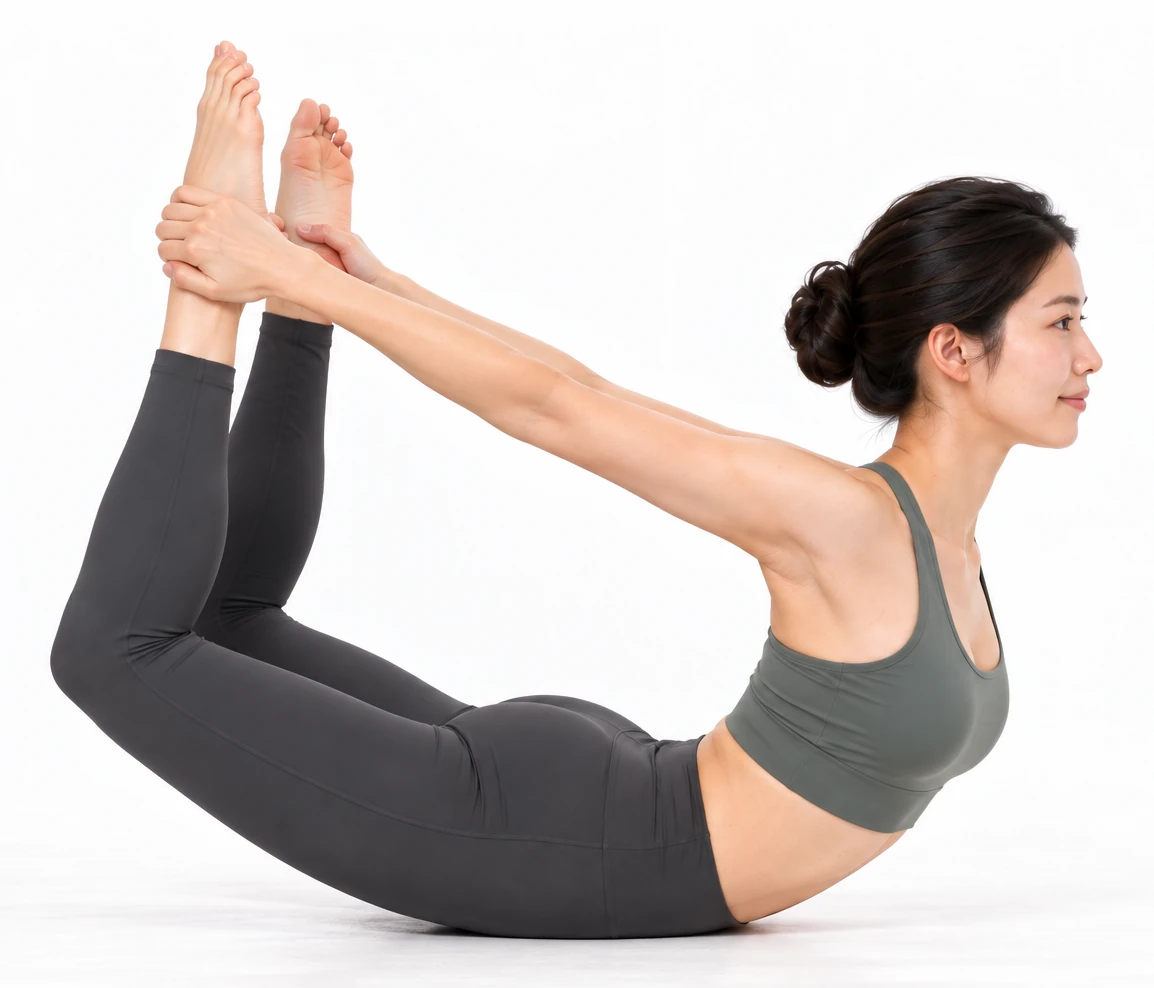 Dhanurasana (Bow Pose)