 YogaFold
YOGAFOLD · POSE GUIDE
Upward Rooster
Urdhva Kukkutasana
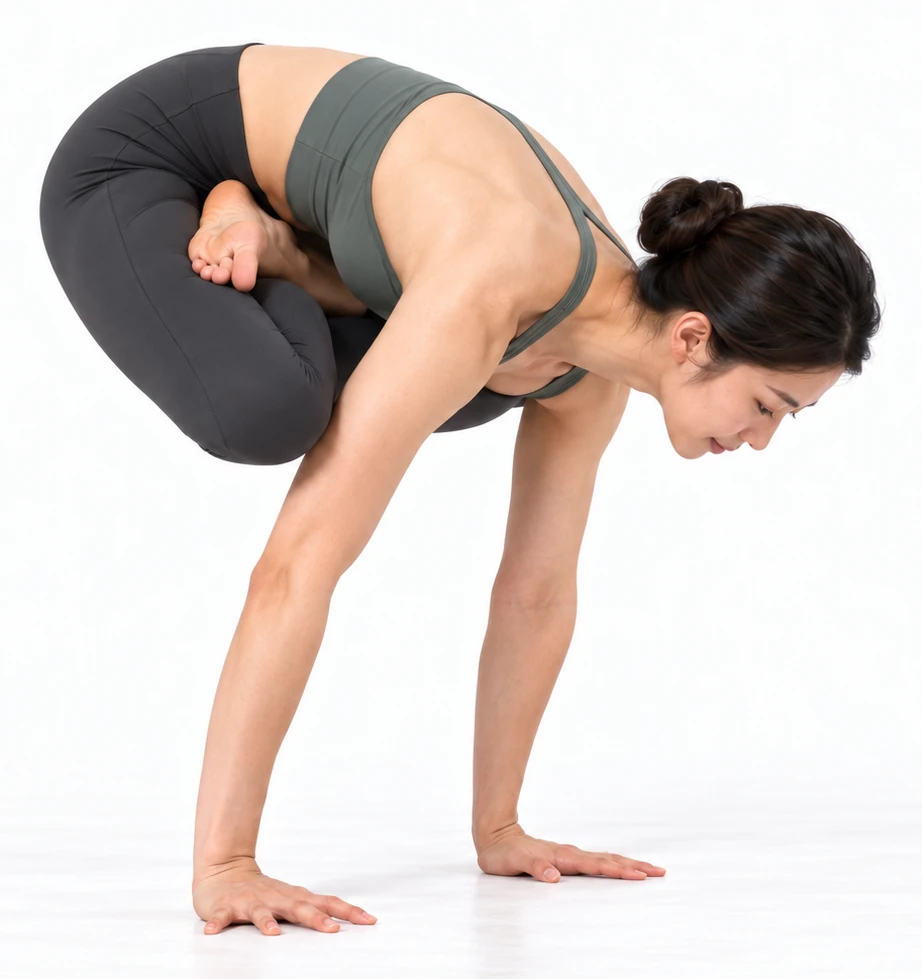
Support Lotus-folded legs on the upper arms in an arm balance.
Urdhva means upward; kukkuta means rooster.
This entry explains preparation and movement characteristics. It does not provide a complete practice procedure for the advanced photographed variation. Learn entry and exit directly with a teacher.
Movement guidance
Preparation
Learn inversion skills and Lotus arm support separately.
Understanding the movement
This arm balance supports Lotus legs on the upper arms; variation A is distinguished by its entry from an inversion.
Hold and breathe
This differs from ordinary Rooster with the arms threaded through the legs. Keep breathing comfortably without holding your breath.
Exit and next movement
Learn transitions out of Lotus and arm support in person.
Variations and sequence transitions
Choose variations and transitions within your comfortable range.
Urdhva Kukkutasana B · Entry variation
A Lotus-on-upper-arms Rooster balance distinguished by its entry as well as the final shape. Do not apply variation A's inversion entry directly.
Urdhva Kukkutasana C · Entry variation
This form has its own entry and transitions into Lotus-on-upper-arm balance. The three forms share a name but follow different movement paths.
Easier variations and preparation
Check the basic form and preparations with a teacher; do not force binds, inversions, or deep backbends.
This advanced variation requires support and range of motion. Check preparation and exit with a teacher when first learning.
Difficulty refers to the photographed form. Individual experience may differ.
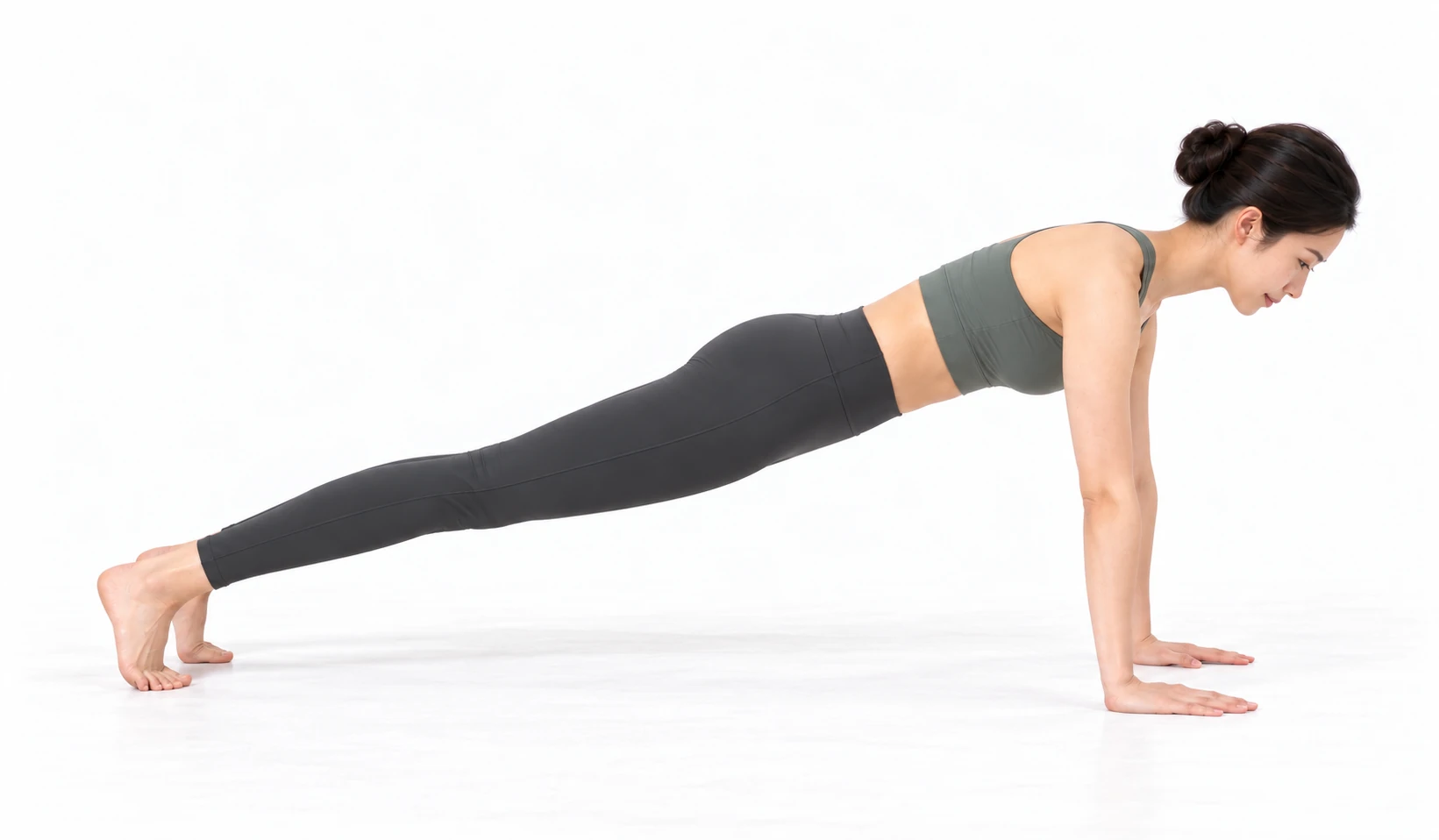 Phalakasana (Plank Pose)
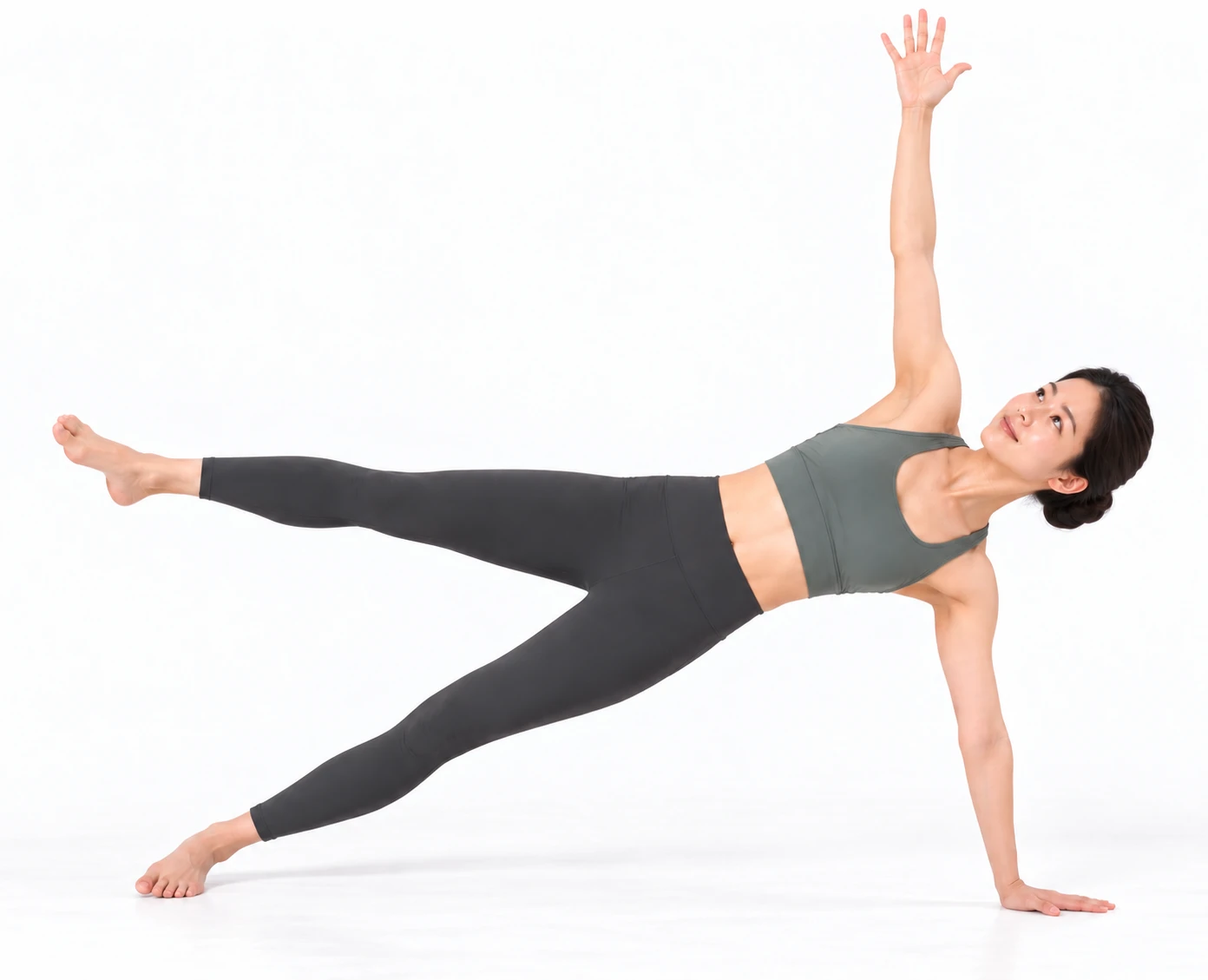 Vasisthasana (Side Plank Pose)
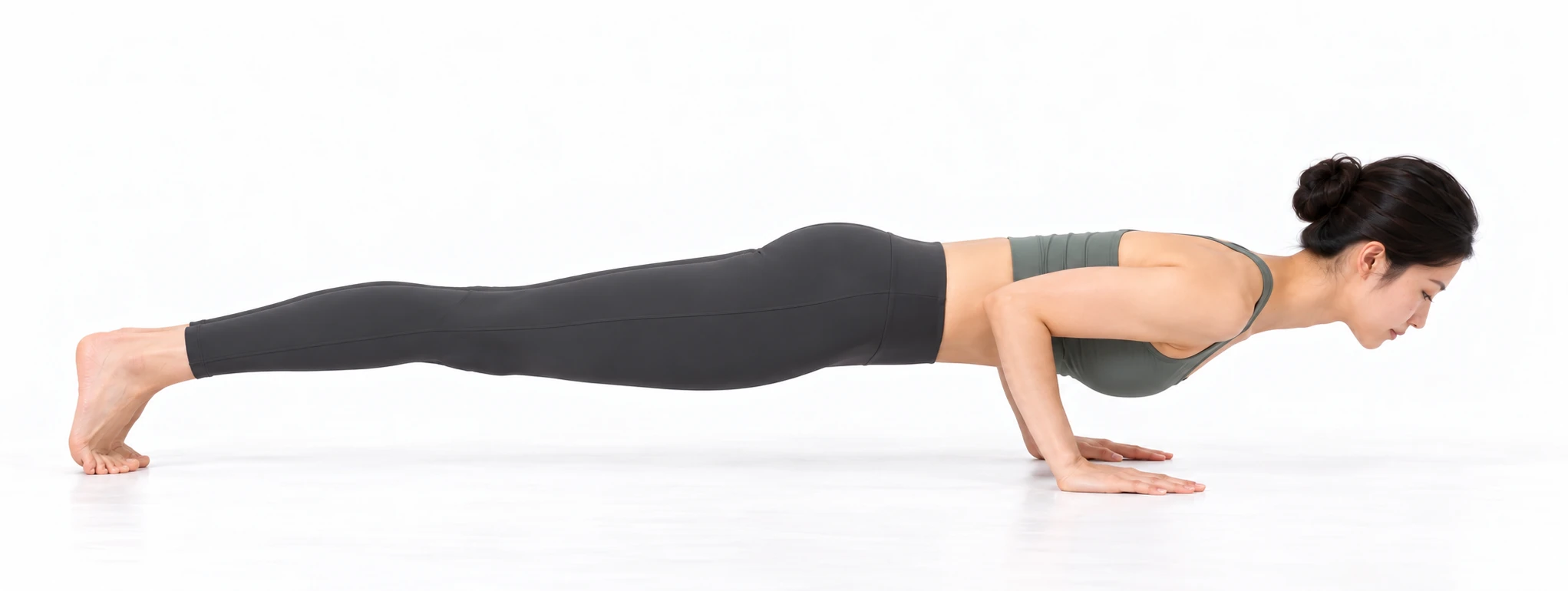 Caturanga Dandasana (Four-Limbed Staff Pose)
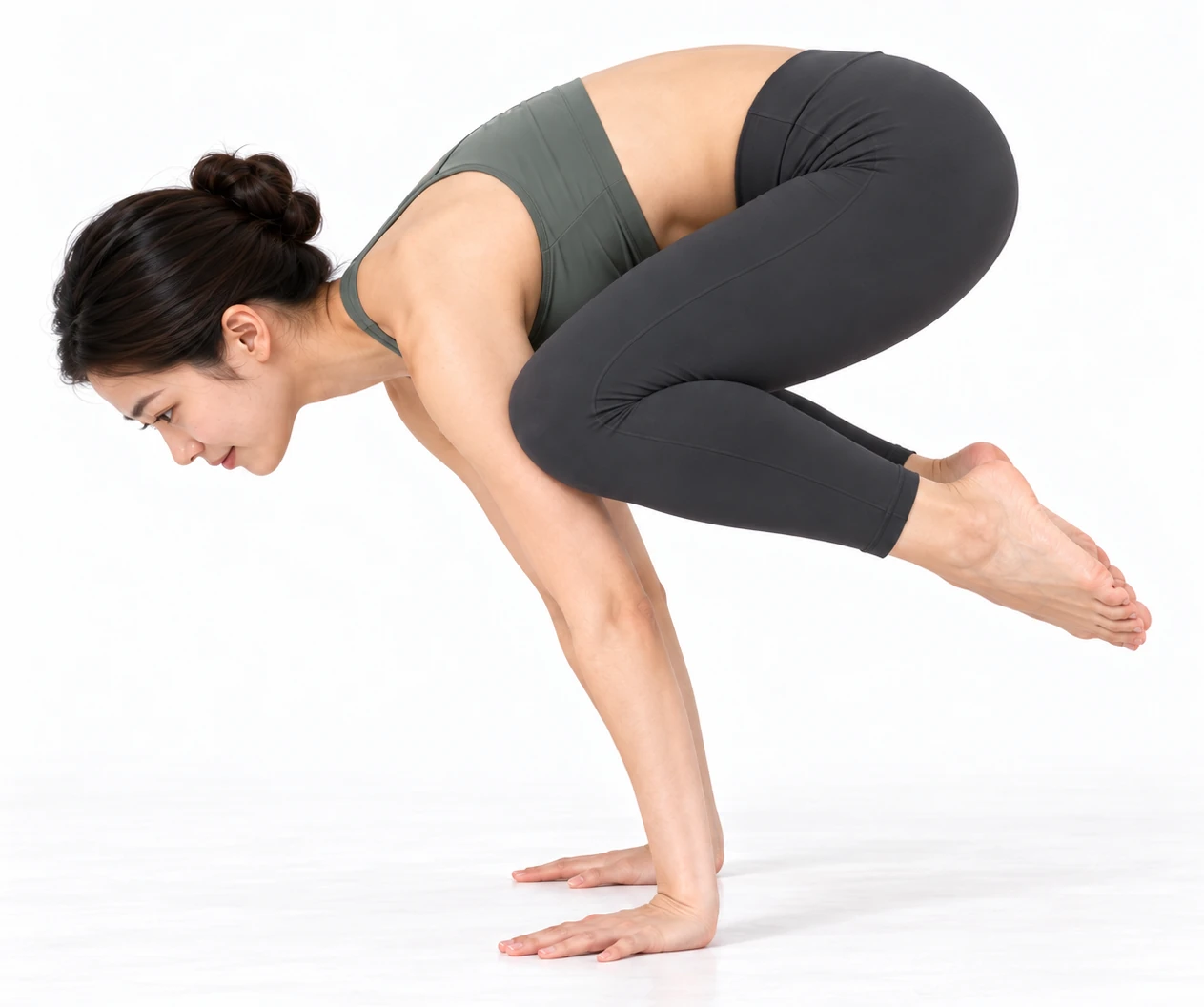 Bakasana (Crane Pose)